8 de octubre de 2026
What a Day at a Working Ranch in Verapaz Really Includes
See what a full day at a working ranch in Alta Verapaz includes: feeding rounds, farm tasks, coffee rows, trails, meals, and options for non-riders.
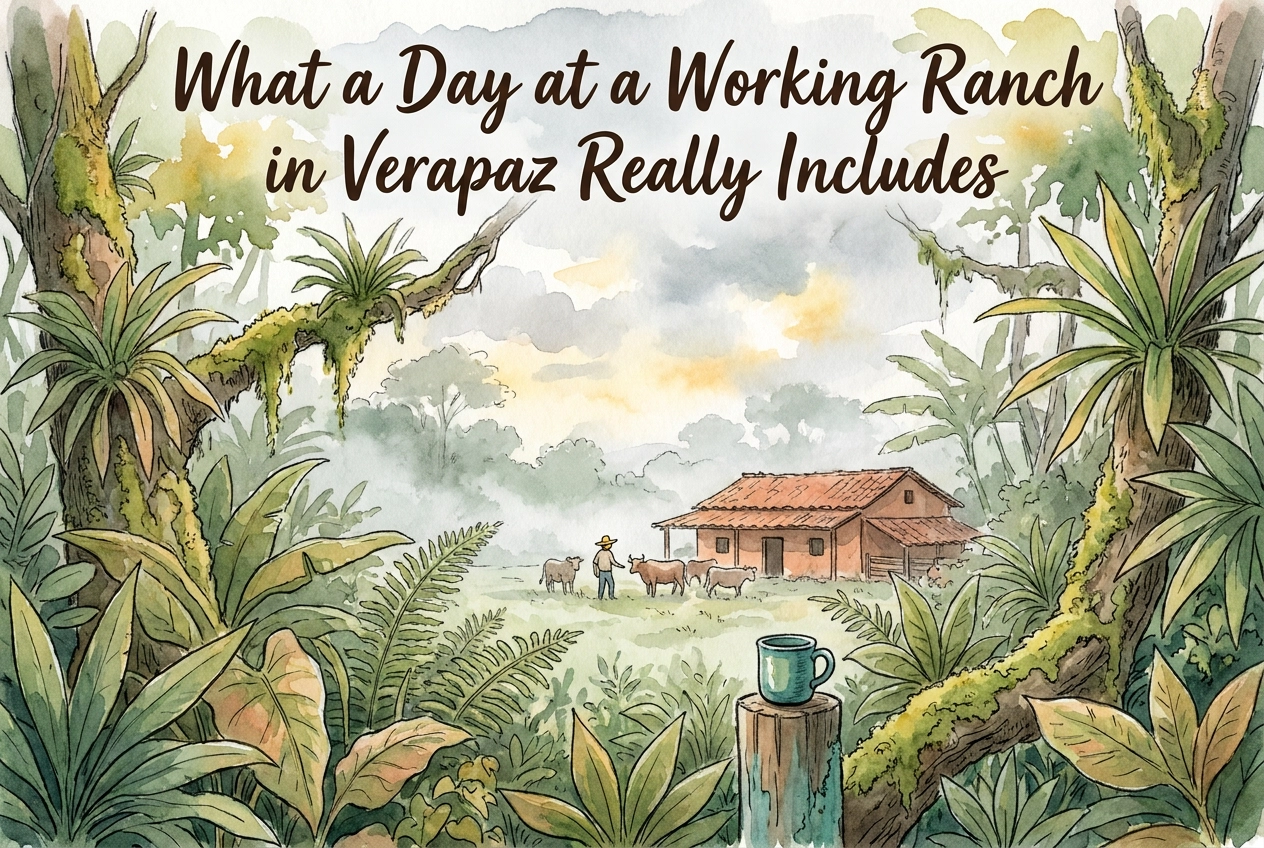
Imagine your day in Alta Verapaz starting with roosters, not a ticket queue. You are not booking an hour on a horse; you are stepping into the rhythm of a real working ranch. That is the heart of this aventura, and it looks different from a typical stable visit. Instead of waiting your turn, you arrive as the farm wakes up, help with the feeding round, and meet animals beyond the horses.
You learn where your horse actually comes from, how guides read the ridges, cloud forest, and coffee rows, and how farm work fits around your ride. We will walk through each part of the day: first light, the animals, saddling up, terrain, lunch at the ranch table, and the long afternoon loop that turns a simple ride into a real adventure. We will also cover non-riders, small children, group logistics, and practical expectations before you book. By the end, you will know exactly what a day here includes, so you can plan your own visit with confidence.
Why a Working Ranch Day Is Not a Stable Visit
At a stable, you book an hour and wait your turn. At a working ranch in Alta Verapaz, the horses are home-bred stock raised on the property, and the day follows the farm's own rhythm rather than a booking sheet.
That changes what you are actually buying. Terrain, animals, farm tasks, coffee ground, and a meal form one continuous arc, not horse time sold by the clock with extras bolted on. You ride between coffee rows and ridge lines under cloud forest, not past a colonial-city backdrop or a coastal plain.
This article sets expectations on purpose. A family that can picture arrival, feeding, saddle-up, trail, lunch, and return decides faster than one reading adjectives.
The day described here happens at Casa Misterio Verde, a base near San Cristobal Verapaz with cabins, a restaurant, a coffee plantation, and the ranch itself.
First Light: Arrival and the Feeding Round
Guests arrive early, before the feeding round begins. The farm is already moving by then, and joining mid-round means missing the sequence that explains everything that follows.
Feeding follows a set order the guide will explain on arrival; staff alone handle the most reactive animals. Visitors can carry the light feed buckets and top up water troughs.
Your guide introduces the team, walks the group through the yard, and marks the boundaries. Visitors on working farms are closely supervised around animals and machinery, and one rule here is absolute: never approach a horse from behind.
Bring closed boots, long trousers, a rain layer, water, sun protection, and spare socks. The ranch supplies helmets and tack.
Then coffee, poured from the plantation on the property. That first cup is usually the moment guests stop being visitors and start being part of the morning.
The Animals You Will Meet Beyond the Horses
The horses are only half the story. Mares, foals and young stock live here and are handled daily, which is exactly why the riding horses stay calm instead of interchangeable.
Cattle do real work on the property, so you will understand why the herd is here at all.
Then the rest of the crew, the part most visitors never hear about. Working dogs, poultry and animales para toda la familia round out the yard. You can usually feed the poultry and greet the dogs; foals and cattle stay behind the fence, watch only.
Contact is managed, not improvised. Feeding happens only with ranch-provided feed at set times, staff stay present, and a fence deliberately separates you from mothers with young.
Two rules to respect: wash your hands straight after any animal contact, and keep food, bottles and bags out of barn areas.
Saddle-Up: Where Your Horse Actually Comes From
The riding horses are foaled, raised, and handled on this property rather than bought in as a rental string. The ranch describes them as calmer and more accustomed to unfamiliar riders as a result of that upbringing.
Your guide rides Western and explains it in plain language. As the guide will explain at mounting, the steering technique used here means you hold the reins in one hand rather than two.
Matching happens before you mount. Tell the guide your weight, height, and confidence level. Horses are paired by size and build, with rider weight kept within what each animal comfortably carries, as the guide will confirm at matching. Nervous riders get the steadier horses.
Expect walking and light trotting on the first stretch. Faster work happens only if the whole group is comfortable and the terrain allows.
Then you groom, check tack, and practise mounting in the yard before anyone opens the gate.
Reading the Terrain: Ridges, Cloud Forest, and Coffee Rows
Once you're through the gate, the ride climbs in bands. The first stretch stays warm and open; as you gain altitude, the air cools, the track narrows to packed dirt, and visibility softens into mist. The sound of the forest changes too, from birdsong and insects to a muffled, dripping quiet.
This is cloud forest, not scenery: moisture-laden cloud hits the Alta Verapaz ridge and the trees catch it, with epiphytes on the trunks taking the first share of the water. Between 2,000 and 2,400 metres, surveys have recorded 142 bird species, and from the saddle you can realistically spot Gray-breasted Wood-Wrens, Common Bush-Tanagers and Amethyst-throated Hummingbirds.
The coffee rows are working ground. During harvest you'll ride past pickers and red cherries; off-season, pruned terraces and shade trees. Keep to the path between terraces, because the edges crumble after rain.
The guide describes the afternoon descent as the stretch beginners feel most in the knees. The guide pauses at viewpoints along the ridge; exact stops depend on the group's pace. It's a ride with pauses, not a photo queue.
Farm Work You Can Join, or Just Watch
Once you are back down from the ridges, the farm keeps working.
Tasks vary by season; the guide can explain what work is active on your visit.
Participation is opt in, never expected. Younger children may help with lighter tasks at the guide's discretion; confirm with the ranch. Fifteen is the general minimum working age under international standards, with only light, non-hazardous work allowed earlier (ILO Minimum Age Convention).
Join one task and the day changes. A group that has filled a feed trough or shifted a fence line reads the grazing, the fences and the ride as one system.
Safety is simple. Tools and machinery are staff only, and under-thirteens stay off tractors. When a bull or a mare with a foal is handled, staff will ask you to stand back and watch.
Some days are quiet. Some are muddy, some are hot. All of them are real farm days, and they end at the same table.
Lunch at the Ranch Table
Once the tools are stowed, lunch lands family-style on a long table by the kitchen, usually under cover beside the drying patio, built from whatever Alta Verapaz does best that week: black beans, plantain, tamalitos, eggs or chicken, and vegetables cut that morning. You can preview the full menu before you arrive, and coffee grown on the property finishes the meal. Lunch is included in the day rate, not billed separately (confirm at booking).
Tell the kitchen about allergies, vegetarian needs, or anything a child won't touch at booking. Large groups should give advance notice; confirm lead time when you book.
When afternoon cloud drops, the table moves indoors and the covered terrace stays dry either way.
Then comes rest, and it isn't filler. That quiet hour between lunch and the afternoon loop lets beginners and older guests recover before heading out again.
Afternoon: The Long Loop and the Real Adventure
Rested and fed, you head out again for the long loop. It runs steeper and longer than the morning stretch, a reward for anyone who took the downtime seriously.
This is where aventura stops being a brochure word. You get mud that pulls at the hooves and mist that rolls in without warning. Ask the ranch whether river crossings or bridges are on the current route. That mist is pure Alta Verapaz.
Weather is planned for, not improvised. If cloud drops low or a storm builds on the ridge, guides shorten the route, skip exposed sections, or turn back early. Nobody argues with a Verapaz afternoon sky.
Then the wind-down. Guests help untack, water and cool the horses, sponge off sweat, and lead them to the pasture. You are not watching staff work; you are part of the routine.
That last hour is usually the one families retell. The itinerary disappears, and the day finally feels like a farm.
Non-Riders, Small Children, and Group Logistics
Not everyone saddles up for the long loop, and that is fine.
Non-riders have real work to join: garden and kitchen help, a walk through the coffee rows, hammocks under shade, or short marked trails you can follow on your own. Riding minimums for age and weight are confirmed when you enquire. Children too small to mount can join feeding rounds, garden tasks, and the coffee tour, always with staff nearby.
For larger parties, the ranch can split groups so riders and non-riders swap activities through the day. Tell the ranch your group size and ability mix as far in advance as possible; ask the ranch for the minimum notice they need so guides, horses, and meals can be rostered.
Older guests and anyone with limited mobility will find level, shaded ground around the main buildings and easy access to the lunch table. Ask about vehicle drop-off if walking distance is a concern.
Plan each non-rider into an activity before you arrive. Sitting in a chair waiting is the fastest way to stall a group booking.
Practical Expectations Before You Book
So you've sorted who rides and who doesn't. Now let's talk money, timing, and the fine print that turns an enquiry into a booking.
A full day runs from first light to late afternoon (confirm exact times with the ranch). A half day cuts the afternoon loop, the farm task, and the long trail. If you want the real adventure, book the full day.
Group caps apply (ask for the current number). Private departures cost more but let you set the pace. Shared rides pair you with others. Reserve well ahead for weekends and high season; groups should enquire at least a month out (confirm with the ranch).
Your fee covers guiding, horses, gear, lunch, and coffee. It does not cover transport to the property, gratuities, extra drinks, or additional meals. Inclusions and exclusions listed here are provisional -- confirm in writing at booking.
Dry-season months generally offer firmer trails and clearer views; wet-season months bring mud and mist. Confirm the current seasonal window with the ranch or check with INSIVUMEH. Coffee harvest begins in November; ask the ranch for the current season's close. The dry-season months tend to offer calmer trail conditions for nervous or first-time riders.
Weather can cancel rides. The ranch may reschedule or refund. Get the cancellation and deposit policy in writing before you pay.
Publisher note: confirm exact durations, group caps, ages, and weight limits with the ranch before this goes live.
Plan Your Day in Alta Verapaz
With the fine print settled, all that remains is to pick a date and shape the day around your group.
With season, group composition, and logistics confirmed, the only remaining step is to send your details to the ranch.
Ask precise questions when you enquire: how is the day split for mixed groups, and what is the wet-weather plan? Specific questions earn specific answers.
Casa Misterio Verde runs cabins, a restaurant and a coffee plantation alongside the ranch day. Send your group details and the day gets matched to the people arriving. Tu lugar para hacer una pausa is the starting point.
Conclusion
One day here covers more ground than a week of hourly stable sessions. You arrive as the farm wakes, join the feeding round, ride horses raised on the property, and read terrain from cloud-forest ridges to coffee terraces. Farm work and a long afternoon loop round it out.
Then send your group details to Casa Misterio Verde. Your day gets matched to the people arriving, so everyone finds a place in the rhythm. Start planning now, and let the ranch set the pace.